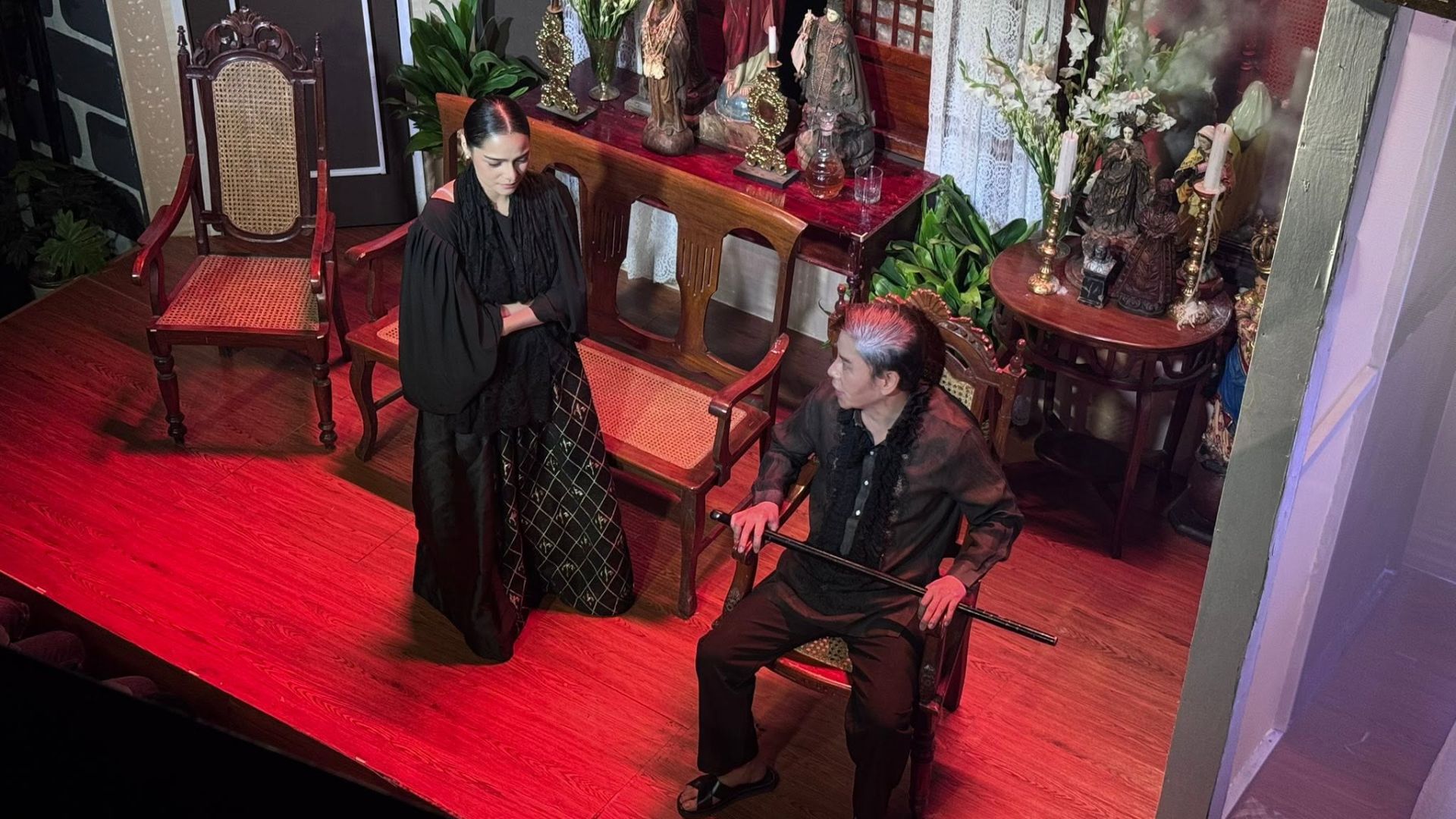
Ang Bangkay (photo: Philstagers Theater Foundation)
I have always believed that theater should not just entertain; it should disrupt. It should leave you slightly altered by the time you step out of the dark hall and back into the neon-lit reality of the streets. I did not do any research about the play prior to my coming—I wanted to get surprised. And boy, was I caught off guard.
Watching Ang Bangkay (The Play), written and directed by the multi-awarded Atty. Vince Tañada and presented by the Philstagers Theater Foundation, was easily one of the best, most powerful Filipino theatrical experiences I have ever had. Long after the final curtain call, the heavy, claustrophobic air of the play still feels thick in my lungs. Two days after I’ve watched it, the lines still linger in my mind—the scenes reverberate even in my dreams! It is the kind of artistic piece that refuses to leave you alone.
An Eerie Genesis: First Impressions of the Stage
Pagdating ko pa lang sa Theater, the set already gave me the creeps. Before a single actor even stepped under the lights, the production design had already begun telling its dark story. The stage was dressed in historical remnants: antique religious images looking down with blind, unmerciful eyes; classic solihiya chairs that carried an aura of ancestral secrets; an old, full-size mirror that felt less like a piece of furniture and more like a portal to human depravity; and an ominous portrait of a married couple staring coldly out into the void.
Even the lighting design contributed heavily to this eerie vibe, casting long, skeletal shadows that seemed to swallow the room. Kung tutuusin, the stage is small. It was an intimate, tightly enclosed space with only five characters breathing life into the script. Yet, the performance was so jaw-droppingly powerful, the script so eerily beautiful, and the pacing so relentlessly dynamic that it did not feel like I was literally inches away from the stage. I was entirely consumed by the world they built. I wasn’t just an audience member; I felt like a silent accomplice trapped inside that horrific house.
The Synopsis: Secrets of the Corintho Household
To fully understand the psychological weight of Ang Bangkay, one must look at its core. It is no surprise that this masterpiece is a Carlos Palanca Memorial Awards First Prize Winner (originally winning for Full-Length Play in Filipino). The narrative structure reflects the literary brilliance that the Palanca award demands—brutally honest, unflinching, and deeply allegorical.
The story centers on the prominent Corintho family, who happen to own a prominent funeral and embalming business during the 1900s. The play opens in the immediate, suffocating aftermath of the death of the family matriarch, Milagros. The tragedy leaves her young daughter, Isabel, carrying the immense, crushing weight of domestic errands and the morbid obligations of their funeral home.
Desperate to escape the emotional and physical prison built by her tyrannical father, Don Segismundo, Isabel plots to flee the household. However, her desperate bid for freedom is foiled when she is caught by the fanatical, deeply submissive house helps. To permanently bind Isabel to his domain and extinguish her rebellious spirit, Segismundo arranges a forced marriage between his daughter and Lemuel, his fiercely loyal assistant in the embalming room. Just when Isabel believes she might find a semblance of autonomy, the deep-seated darkness of the Corintho household unravels completely. What follows is a tragic cascade of secrets, deception, unspeakable violence, and the ultimate corruption of innocence within a house that literally profits off death.
The Characters as National Allegories: Napapanahon at Makabuluhan
While the setting of Ang Bangkay is firmly rooted in the Spanish colonial era, the genius of the play lies in how fiercely relevant and timely it remains today. Napapanahon. It serves as a microscopic mirror of the macroscopic ailments of contemporary Philippine society. The five characters are not just historical figures; they are active archetypes of our ongoing socio-political struggle. Without giving away the major plot twists and the shocking climax, the true brilliance of the cast lies in what—and who—their characters represent in our society today.
Señor Segismundo (Vince Tañada) – The Oppressor
Played with a terrifyingly magnetic, primal intensity by Direk Vince Tañada himself, Señor Segismundo represents the ultimate patriarchal tyrant. But looking deeper, for me, symbolizes an oppressor character—our colonizers, our abusive government, ang mga masasamang damo na politicians. Segismundo is a man who deals with corpses, stripping them of dignity, much like how corrupt leaders treat the citizenry. He demands absolute obedience, uses religion and tradition to justify his cruelties, and consumes everything around him to feed his insatiable greed and lust for control. Tañada’s performance is nothing short of masterfully grotesque; he forces you to look at the raw, unfiltered face of power without a mask.
Miding (Adelle Ibarrientos)
The character of Miding—the loyal, complicit housekeeper—is perhaps the most frustrating yet painfully realistic figure on that stage. Miding, for me, is anyone who condones and tolerates the bad acts of the government—yung nagbubulag-bulagan at mga panatiko ng mga tiwaling opisyal. She sees the abuse, she breathes the air of corruption every day, yet she actively works to suppress any attempt at rebellion. She chooses comfort in servitude over the danger of truth. She rationalizes the oppressor’s actions because “that’s just how things are.” In modern times, she is the voter who defends tyranny, the citizen who silences critics, and the enabler who keeps the corrupt firmly seated on their thrones.
Isabel (Vean Olmedo) – The Brutalized Nation
Isabel is the emotional and tragic heartbeat of the entire play. Isabel felt like she represents our dear nation, patuloy na sinisikil, patuloy na ‘ginagahasa’—and despite all the dark things that continue to happen—pinipilit bumangon. Watching Isabel’s trajectory is a painful, heartbreaking experience. She is stripped of her rights, isolated, physically and emotionally violated by the very entities meant to protect her, yet there is a defiant ember burning inside her soul. Her struggle is the struggle of the Filipino people—battered by typhoons of corruption, scarred by centuries of systemic injustice, yet stubbornly refusing to completely die.
Lemuel (Gerald Magallanes) – The Hand of the Tyrant
Lemuel serves as Señor Segismundo’s fiercely loyal embalming assistant and the man forced upon Isabel. Played with an unsettling depth by Gerald Magallanes, Lemuel embodies the systemic foot soldiers of an oppressive regime. He is the operator within the machine of death—the implementing arm that carries out the dirty work of the master. In our society, Lemuel represents those who execute unjust orders, the law enforcement or subordinates who compromise their own morals and humanity for survival, position, or misguided loyalty. His presence on stage adds a chilling layer of tension, showing how easily youth and labor can be weaponized by tyrants.
Oryang (Yvonne Ensomo) – The Broken Witness
Completing the brilliant five-member cast is Oryang, brought to life with raw, trembling emotion by Yvonne Ensomo. Oryang represents the collateral damage of a broken system—the quiet witnesses to atrocity who carry the psychological scars of an environment built on fear. She represents the vulnerable sectors of society who are trapped in corners, lacking the power to fight back directly but forced to endure the daily horror of their surroundings. Her anxieties and outbursts on stage beautifully amplify the suffocating, inescapable atmosphere of the Corintho household.
A Haunting Echo
The play is uncomfortably visceral. It does not shy away from nudity, raw language, and horrific depictions of human malice because, as the director stated, these elements are necessary to showcase how blinding the darkness can get before we finally yearn for the light.
The line that struck me the most, the one that triggered a cold shiver down my spine and left me paralyzed in my seat, was Isabel’s agonizing scream:
“Ang Funeraria Corintho ang pumapatay sa akin!”
It was a line delivered with such raw, guttural grief that it transcended the colonial setting of the stage. The funeral home was supposed to be their livelihood, their home, their sanctuary. Instead, it became her executioner.
It makes you look inward. Sa makabagong panahon, ano ang pumapatay sa iyo?
Is it the soul-crushing weight of an economic system that demands everything from you but gives back pennies? Is it a political landscape so rife with impunity that truth feels like a liability? Or is it the silence of our modern-day Midings—the collective apathy of a society that watches its youth get stripped of their future, choosing to look away because it is safer to be blind?
Final Verdict: A Must-Watch Masterpiece
Ang Bangkay is a masterpiece of psychological horror and political allegory. It forces us to confront the reality that the real monsters do not hide in the shadows or inside the coffins; they sit at the heads of our dining tables, they hold high offices, and sometimes, they stare back at us in the mirror when we choose silence over action.
The play had a very limited run and had its final staging recently. However, with its recent cinematic adaptations and potential theatrical revivals by the Philstagers Theater Foundation, you must keep your eyes peeled. If ever Philstagers Theater Foundation restage this again, make sure to watch! Do not miss the chance to be broken, confronted, and ultimately awakened by this extraordinary piece of Filipino art.